

Book Review: Fair Ones by Lydia Millet
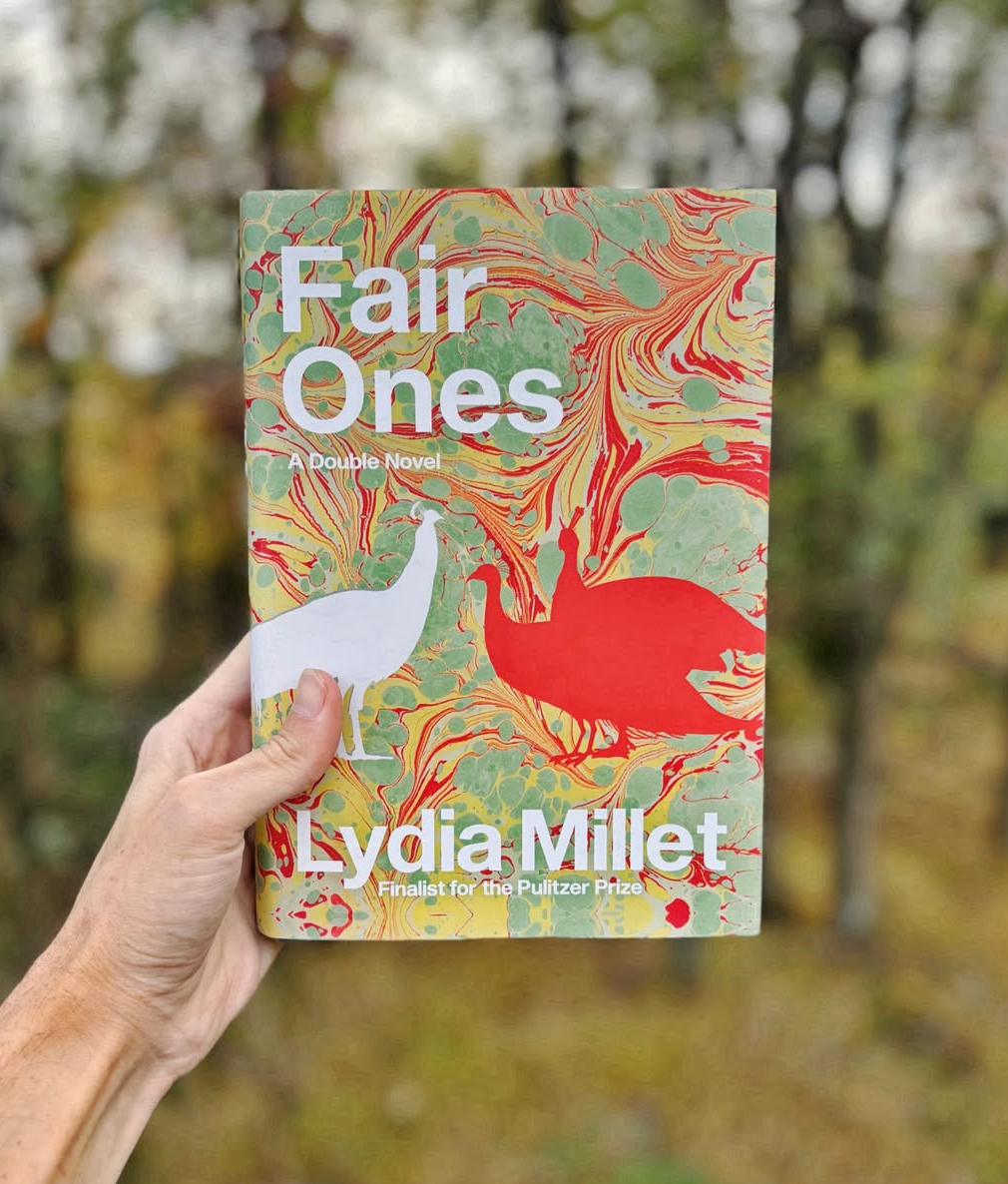
First sentence: “I was standing at the end of the bar, a bit dazed, when Jen passed and nudged my back.”
A deceptively simple, delightfully contemporary novel about the friction between midlife uncertainty and sudden, senseless loss.
I live for a book about so-called adults who are still trying to figure their shit out. In their forties, Mara and Jen have been friends for decades and, by most measures, have successful, or at least self-sufficient lives. But they’re still improvising. When their best friend, Claire, is killed at a bus stop, the everyday anxieties they were already navigating—from career transitions to relationships to aging parents—are magnified by her absence.
I wasn’t immediately sold on the “double novel” framing, but the more I sit with it, the more I appreciate it. Mara and Jen share a history so intimate it borders on codependence, yet experience this loss in very different ways. The dual structure gives each woman space to process the tragedy on her own terms without diminishing their bond. Their lives are interconnected but by no means interchangeable.
What makes the novel work so beautifully is Millet’s effortless dialogue and fantastic secondary characters. The conversations have the natural rhythm and ease of people who know each other well, who can be funny, blunt, or distracted without having to re-establish themselves every time they speak. Rather than offering perfectly formed insights, they talk about the small details of their lives. They can miss their friend and still be irritated with each other. Terrible things and funny things coexist. Millet never insists that every interaction be profound just because someone has died.
I often find that the books I like most are the hardest to describe, especially when my response is so based on vibes. I loved the feeling of this surprisingly tender world: the characters seem real, give each other room when needed, and still show up. They understand each other without needing everything spelled out. It’s a world made hopeful not by grand gestures but by ordinary moments of human connection.
My first Lydia Millet, and certainly not my last.


Comments